Concrete Slab & Foundation Work
Solid foundations built right the first time for homes, garages, sheds, and more.
Why Your Foundation Matters
Your foundation is the most important part of any structure. Whether you're building a new home, adding a garage, or putting up a storage shed, everything depends on a solid, level foundation. A properly constructed concrete slab distributes the weight of the building evenly, prevents settling, and protects against moisture problems. Cut corners here, and you'll deal with cracks, uneven floors, and structural issues for years to come.
Here in Bartlesville, soil conditions and weather make foundation work even more critical. Our clay-heavy soil expands when wet and shrinks when dry, putting stress on any slab or foundation that isn't built to handle it. Freeze-thaw cycles in winter can cause heaving and cracking if the base isn't prepared correctly. We've seen plenty of foundation problems caused by inexperienced contractors who didn't account for these local challenges. That's why we take site preparation, drainage, and reinforcement seriously on every project.
Whether you need a slab-on-grade foundation for a new home, a concrete pad for a garage or workshop, or a foundation for an addition, we follow proven methods to ensure long-term stability. We work with builders, homeowners, and contractors throughout the Bartlesville area to deliver foundation work that meets or exceeds building codes and stands the test of time.
Our Foundation Installation Process
Foundation work is not the place to rush or guess. Every step matters, from the initial site evaluation to the final finishing touches. Here's how we approach each project to ensure your foundation is built right.
Site Evaluation and Soil Testing
Before we dig, we assess the soil type, drainage patterns, and site grade. Soil conditions vary even within a single property, and understanding what we're working with helps us determine the best approach. If the soil is unstable or prone to shifting, we'll recommend additional measures like deeper excavation, better compaction, or an upgraded base. Proper drainage planning at this stage prevents water from pooling under the slab, which is one of the leading causes of foundation failure.
Excavation and Base Preparation
We excavate to the required depth based on the building plans and local code requirements. Then we grade and compact the soil to create a stable surface. In most cases, we add a layer of crushed gravel or stone to improve drainage and provide a solid base for the concrete. This is especially important in areas with clay soil, which can hold water and cause problems down the line. We also install any necessary plumbing or utilities that will run beneath the slab before pouring.
Forming, Reinforcement, and Pouring
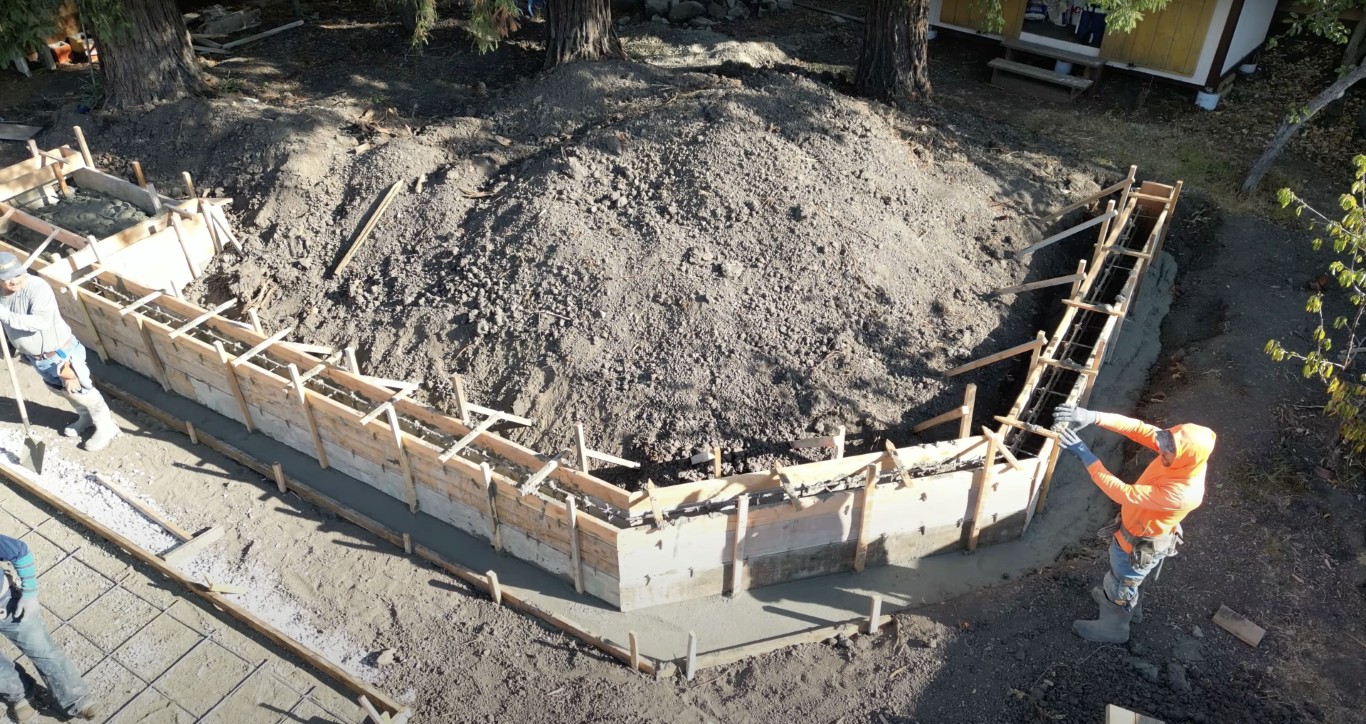
Once the base is ready, we set forms to define the slab dimensions and edges. Steel rebar is installed in a grid pattern to reinforce the concrete and prevent cracking under load. For larger slabs or foundations that will support heavy structures, we may use thicker concrete and additional reinforcement. After the pour, we level and finish the surface, install control joints, and apply a curing compound. Proper curing is essential for strength and durability, so we protect the concrete from drying too quickly during the first several days.
Types of Slabs and Foundations We Install
Different projects call for different foundation types. Here are the most common slabs and foundations we work on in the Bartlesville area.
- •Slab-on-grade foundations: These are poured directly on the ground after proper site preparation. They're commonly used for homes, garages, and pole barns. A well-built slab-on-grade provides a stable, economical foundation for most residential and light commercial structures.
- •Garage and workshop slabs: These need to be thick enough to support vehicles and equipment. We typically pour these at least 4 to 6 inches thick with proper reinforcement and control joints.
- •Shed and outbuilding pads: Even smaller structures need a solid foundation to prevent settling and keep the building level. We pour these to the appropriate thickness based on the building size and intended use.
- •Addition foundations: When you're adding onto an existing home, the new foundation needs to tie into the old structure properly and match the existing grade and height. We coordinate with builders to ensure everything lines up correctly.
- •Equipment pads: Heavy equipment like generators, HVAC units, or storage tanks need a stable, level concrete pad to sit on. We pour these to the specifications required by the equipment manufacturer.
No matter what type of slab or foundation you need, the goal is the same: a level, stable surface that will support the structure for decades without settling, cracking, or causing problems. We use quality materials, proper techniques, and attention to detail on every pour, whether it's for a small shed or a commercial building.