Concrete Steps & Stairs
Safe, durable steps built to code with proper dimensions and slip-resistant finishes.
Why Steps and Stairs Need Special Attention
Concrete steps and stairs are more than just a way to get from one level to another. They need to be safe, comfortable to use, and built to last through years of foot traffic and weather exposure. Unlike a flat slab where minor imperfections might not matter much, steps must be built with precise dimensions and consistent proportions. If the rise or run is off by even a small amount, the steps become awkward or dangerous to use.
Building codes set specific requirements for step dimensions, handrails, and safety features for good reason. Steps that are too steep, too shallow, or inconsistent cause trips and falls. Around Bartlesville, we've seen plenty of poorly built steps that don't meet code and create hazards. Some have uneven risers where each step is a different height. Others lack proper footings and have settled or cracked over time. These problems aren't just inconvenient. They're liability issues waiting to happen.
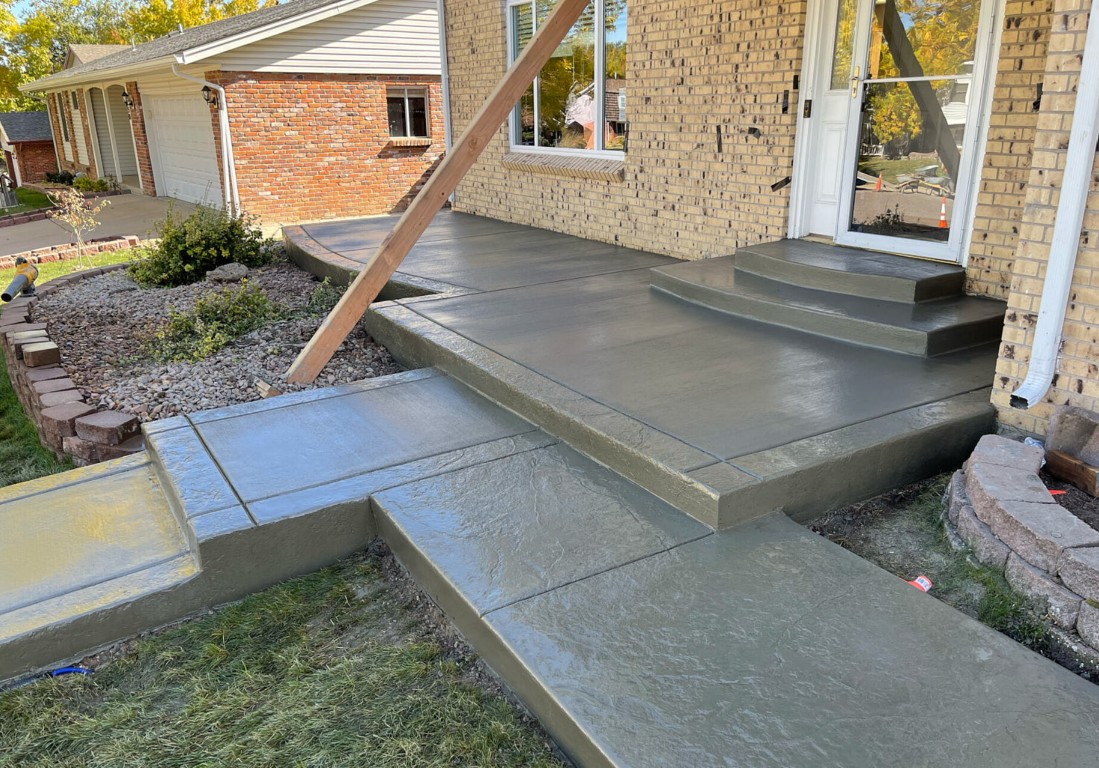
Whether you need front entry steps, back porch stairs, or stairs connecting different levels of your yard, we build them right. We follow code requirements, use proper footings and reinforcement, and pay attention to the details that make steps safe and long-lasting. From single-step stoops to multi-step staircases, every concrete step project in Bartlesville we complete is built with safety and durability as the top priorities.
Building Steps the Right Way
Concrete steps involve more than just pouring concrete in a stepped shape. Here's what goes into building stairs that are safe, code-compliant, and built to last.
Planning and Design
We start by measuring the total rise, which is the vertical distance from bottom to top. This determines how many steps you need and the height of each riser. Code typically requires risers between 4 and 7.75 inches, with all risers in a flight being consistent within a quarter inch. The tread depth, or run, is the part you step on and must be at least 10 to 11 inches deep. Getting these dimensions right from the start ensures the steps feel natural and safe to use.
Foundation and Forming
Steps need a solid footing below the frost line, just like any other concrete structure. Without proper foundation, steps will settle, crack, or pull away from the building. We excavate and pour a footing, then build forms that define the shape and dimensions of each step. The forms must be level, square, and securely braced because any movement during the pour will ruin the finished product. We also install reinforcement like rebar to tie the steps together and prevent cracking.
Pouring and Finishing
We pour the concrete from the bottom up, making sure each step is properly filled and compacted to avoid voids. The surface is finished with a slip-resistant texture, typically a broom finish, to provide traction in wet or icy conditions. Edges are rounded slightly to prevent chipping and improve appearance. Proper curing ensures the concrete reaches full strength and durability. The result is a set of steps that not only looks good but also meets code and provides safe access for years to come.
Types of Concrete Steps We Build
Different situations call for different types of steps. Here are the most common projects we handle around Bartlesville.
- •Front entry steps: These are the main access to your home and need to be wide, welcoming, and safe. We build them to match your home's style, whether that's simple and functional or more decorative with curved edges and custom finishes.
- •Back and side entry stairs: These stairs provide access to rear doors, decks, or porches. They need to be just as sturdy and code-compliant as front steps, even if they're less visible.
- •Garage and basement steps: Steps leading into garages or basements often see heavy use and need to handle foot traffic and occasional loads. We build these with durability in mind.
- •Outdoor stairways: Longer flights of stairs connecting different levels of your property or leading to patios and outdoor spaces require careful planning for drainage, handrails, and code compliance.
- •Replacement and repair: When existing steps have deteriorated, settled, or become unsafe, we can remove and replace them with new construction built to current standards.
No matter what type of steps you need, we approach each project with the same attention to safety, code compliance, and quality. Steps are too important to cut corners on, and we make sure yours are built right.